
On March 26–27, 2026, the international symposium “Legacies and Futures of p4c Hawaiʻi” was held at the University of Hawaiʻi at Mānoa. The symposium brought together educators, students, researchers, and community members from Hawaiʻi and beyond, including Japan, Taiwan, and the mainland US, to reflect on the living legacy of p4c Hawaiʻi developed by Dr. Thomas E. Jackson, a retired member of the Department of Philosophy and former Director of the Uehiro Academy for Philosophy and Ethics in Education, and to consider its future directions in local, national, and international contexts.
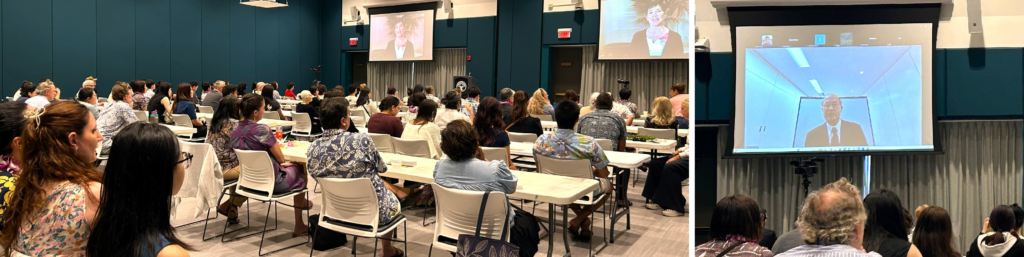
The symposium opened with a message from UH President Wendy Hensel. In her remarks, she thanked the Uehiro Foundation on Ethics and Education for its steadfast support spanning more than two decades of a transformative partnership and recognized the significance of p4c Hawaiʻi in bringing philosophical dialogue into K-12 classrooms. Addressing educators from across the islands and around the globe, President Hensel noted, “Your work in the classroom is where theory meets practice,” and emphasized that the symposium “represents the best of what a land-grant institution can offer – a space where the Uehiro Academy and our Department of Philosophy collaborate directly with K-12 schools to foster a culture of mindfulness and intellectual curiosity.” Dr. Maruyama of the Uehiro Foundation on Ethics and Education then expressed the Foundation’s gratitude for its partnership with the University of Hawaiʻi and its vibrant local community, while paying tribute to Thomas Jackson’s distinguished life as an educator and a member of the Philosophy Department.
In his keynote address, Dr. Thomas Jackson reflected on the origins, development, and philosophical significance of Philosophy for Children Hawaiʻi, or p4c Hawaiʻi. Looking back over four decades, he described his discovery of philosophy with children as “almost magical” because it opened a new pathway to understanding children, teachers, and communities as genuine partners in philosophical inquiry. In his talk, Jackson traced his graduate studies at the University of Hawaiʻi at
Mānoa, his engagement with existentialism and comparative philosophy, and his eventual encounter with Matthew Lipman’s Philosophy for Children project in 1984. While Lipman’s work provided the initial inspiration, Jackson noted that p4c Hawaiʻi gradually developed its own distinctive orientation through creative adaptation in Hawaiʻi’s classrooms and communities. The lecture examined the community ball, one of the best-known practices of p4c Hawaiʻi. Jackson explained that the community ball becomes a concrete symbol of shared inquiry, intellectual safety, embodied communication, and communal
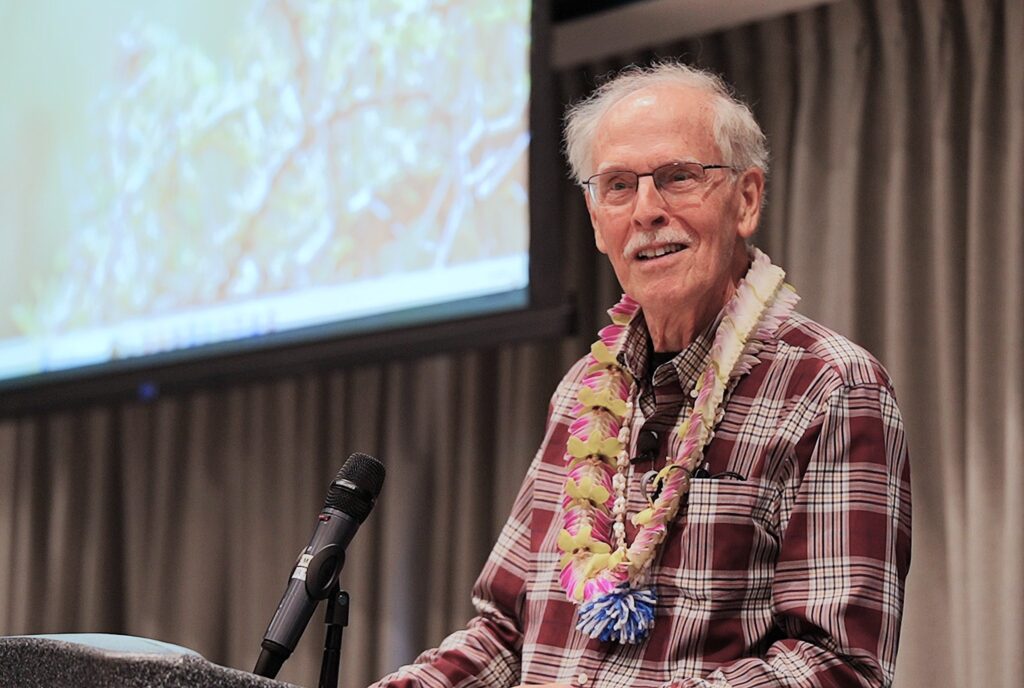
responsibility. He also discussed playfulness, spontaneity, and the idea of primal wonder, all essential to p4c Hawaiʻi. Through many stories, Jackson further articulated how wonder can lead people into profound questions of death, identity, belonging, love, and human vulnerability. He closed by honoring teachers and affirming that their work matters profoundly. For him, p4c Hawaiʻi continues wherever children and adults form communities of inquirers grounded in intellectual safety, patience, playfulness, and wonder.
The second day, held on March 27, was devoted to presentations, inquiry, and discussion centered on the theme of legacies and futures. The morning opened with Panel Session 1, “p4c is not a program,” featuring Dr. Benjamin Lukey, Dr. Maughn Gregory, and Dr. Soichi Kawasaki. This session explored foundational questions about the character, orientation, and educational meaning of p4c beyond programmatic or institutional reduction. The program continued with Panel Session 2, “Live Well in the Present, Live Well in the Future: Exploring the Legacy and Futures of p4c Hawaiʻi through Student Voice.” This session featured Dr. Thomas Yos together with student participants from local schools sharing their unique p4c Hawaiʻi experiences.
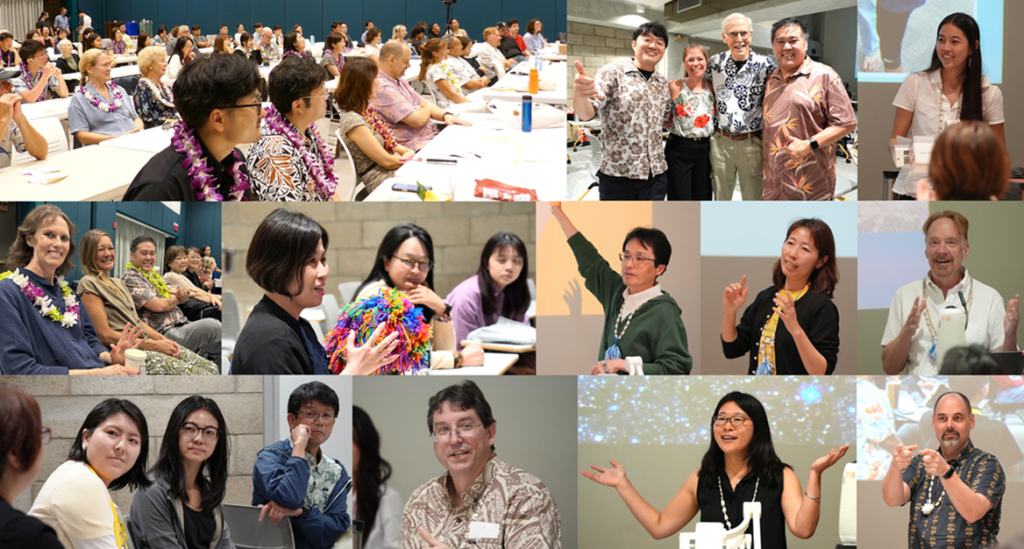
Following breakout inquiries and lunch, the afternoon resumed with Panel Session 3, “The Educative Experience: Exploring the Evolution and Future of UH Mānoa’s philosophy for children Hawaiʻi Educational Programming.” Presenters included Dr. Chad Miller, Dr. Amber Makaiau, Mr. Brendan McCarthy, and Ms. Maria Esperanza Chapman. The final major panel, “p4cHawaiʻi with International Perspectives,” brought together Dr. Mitsuyo Toyoda, Dr. Jessica Ching-Sze Wang, Dr. Noboru Tanaka, and Dr. Aya Watanabe. By placing p4c Hawaiʻi in conversation with international partners and perspectives, this session highlighted the wider significance of the work and the different ways its ideas and practices continue to travel, develop, and take root across cultural contexts.
The symposium concluded with breakout inquiries and final reflections, inviting participants to articulate one key takeaway, question, or new line of thought they were leaving with at the end of the two-day gathering. The event remained faithful to the spirit of p4c Hawaiʻi itself: Inquiry not as closure, but as an opening toward further reflection, conversation, and educational practice. The symposium provided an important occasion to revisit the roots of p4c Hawaiʻi, understand its principles and distinctive practices, recognize the communities and institutions around the world that have sustained it, and think seriously about its future. It also demonstrated the continuing vitality of p4c Hawaiʻi as a living educational movement shaped by inquiry, community, and a commitment to intellectual and moral growth. The CALL Uehiro Program worked with the Uehiro Academy for Philosophy and Ethics in Education and the Department of Philosophy to organize this successful international symposium.