
Report by Andrew Sinnes (Department of Philosophy)
The purpose of my travel was threefold: immersing myself in the Japanese language, making connections with scholars in Japan who study American philosophy, and researching Shingon Buddhism in general and its Goma Fire Ceremony in particular. The travel allowed me to compare two disparate semiotic systems: one from America, that of Charles Sanders Peirce, and one from Japan, that of Shingon Buddhism’s founder, Kōbō Daishi Kūkai.
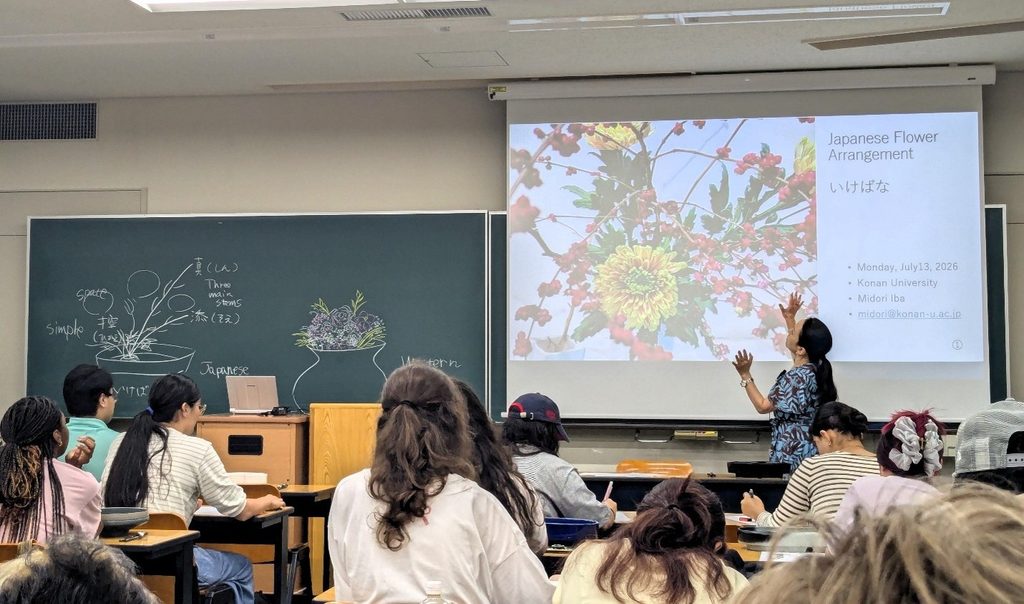
During the first part of my trip, I enrolled in a six-week Japanese Summer Intensive Program at Kōnan University in Kōbe City. Besides immersing myself in the Japanese language, I participated in various cultural exchange programs. To meet scholars in Japan working on American philosophy, I attended the 13th American Philosophy Forum at the University of Tokyo. This included several talks on Charles Sanders Peirce, the founder of American pragmatism and semiotics, a theme central to my research.
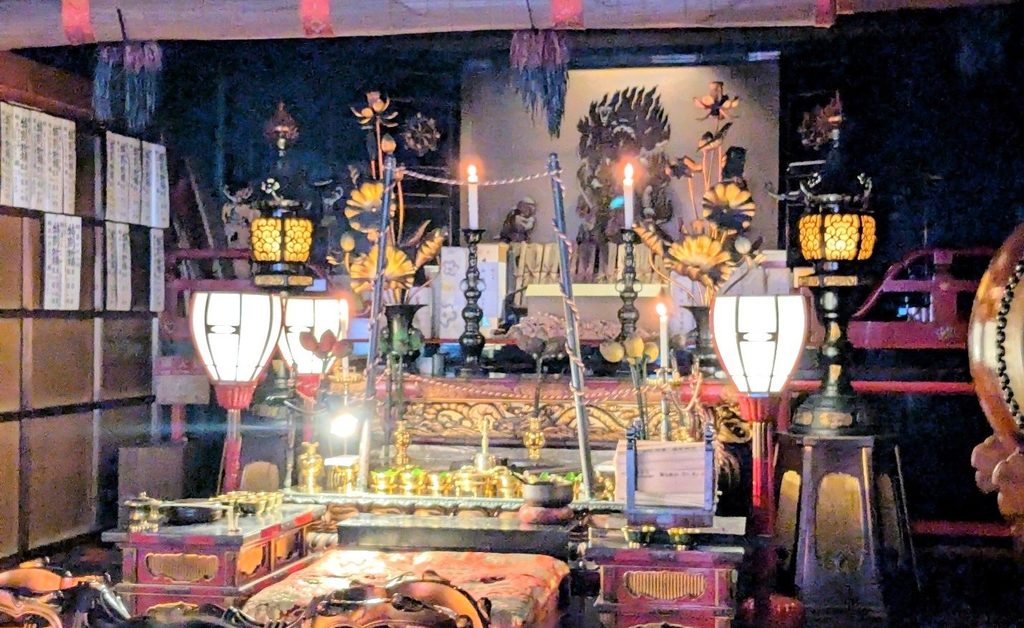
I traveled to meet with the renowned Shingon master Ajari Jōmyō Tanaka in Tokyo and also attended four Goma Fire Ceremonies in person, two each at two different temples famous for the ceremony: Taiyū-ji in Ōsaka City and Takahata Fudō-son in Hino City, Tokyo. Not only were their approaches very different from each other, but they were also quite different from ceremonies I have seen performed here in Hawaiʻi or elsewhere in Japan. This made my understanding of the ceremony better informed.
I am very grateful for the support that enabled me to engage in East-West philosophical dialogue in a substantial way, and I hope that my work in semiotics can help promote further dialogue between religion and science more broadly. Arigatō gozaimasu, thank you very much, and mahalo nui!