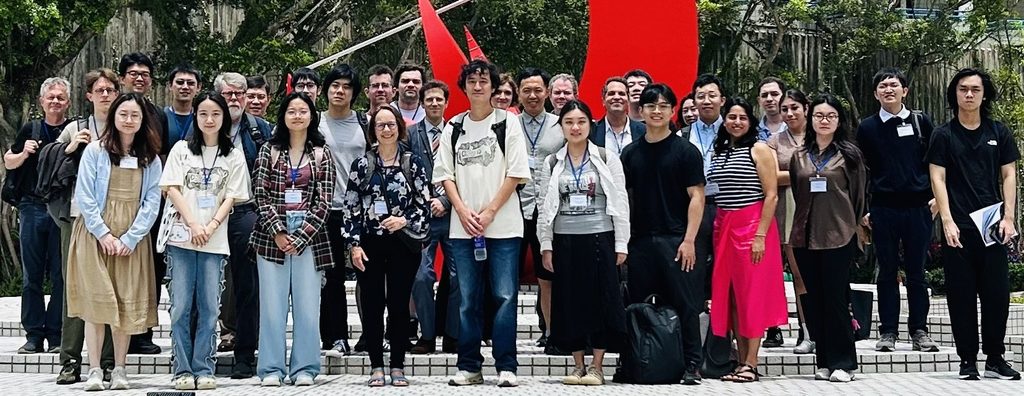
Report by Yihan Hu (Department of Philosophy)
This summer, from June 23 to June 26, I participated in the HPS (History and Philosophy of Science) conference at the Hong Kong University of Science and Technology. The conference brought together scholars from history and philosophy of science, as well as science studies, to explore current developments in integrated HPS. I truly benefited from the inspiring discussions and conversations throughout the conference.
Across the presentations, several recurring themes emerged, including the historical development of scientific concepts and theories, the relationship between scientific practice and philosophical analysis, and the methodological challenges of integrating history and philosophy of science. I was also struck by studies on the interactions between scientific theories and specific scientific phenomena or problems, such as Yihan Jiang and Stefan Bernhardt-Radu’s study on new mechanism and processual ontology in genetics, and Ilir Isufi’s case study on linguistic relativity. The latter showed the tension between a more humanistic and anthropological approach to language, on the one hand, and a more controlled experimental approach that prioritizes internal validity over external validity, on the other.
Keynote talks were given by professors from UBC, the University of Hannover, and the University of Leeds. They each provided unique insights into the necessity of a more integrated approach to HPS, including philosophy, psychology, and pedagogy. Their talks underscored the importance of science education and the history of science, as well as the interactions and mutual shaping between different fields of science and philosophy. Our “life-world” is more complex than any single study can capture.