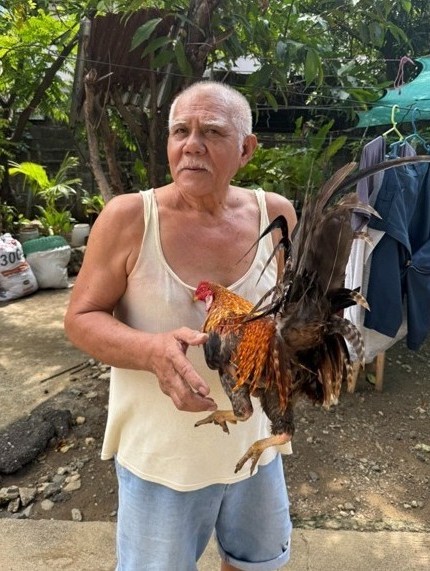
Report by Joe Manuel (English Department)
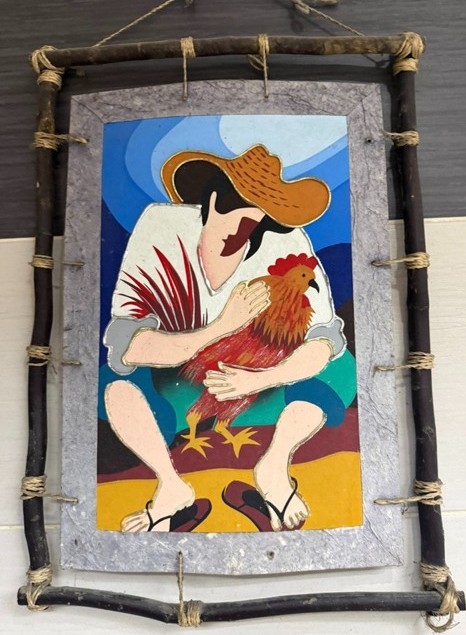
Sabong, or cockfighting, is a tradition in the Philippines that pre-dates colonization. Antonio Pigafetta, scribe of Ferdinand Magellan during his 1521 voyage to what is now known as the Philippines, took note of this practice among the local people:
They have some rather large domestic cocks, which, from some superstition, they do not eat, but they keep them for fighting; on such occasions they make bets and offer prizes, which are acquired by the owner of the conquering cock.
My work brings into focus how sabong has survived and evolved over hundreds of years in the Philippines. With the support of the CALL Uehiro Program, I traveled to the Visayas region to better understand its history and culture.
The project treats sabong as a site for studying community practices, precolonial and colonial history, and forms of cultural and national identity. Gathering information at university libraries was extremely valuable, as I uncovered literature specific to these institutions and helpful for my project. Visiting cockpits throughout the Visayas region was also invaluable. I was able to interact with sabongeros, or chicken handlers, as well as others involved in cockfighting culture, whose perspectives are not often found in academic sources. Beyond the frenzied, feathered dance of two chickens battling for supremacy, the ritual of sabong touches upon topics related to colonialism, gender studies, history, cuisine, entertainment, and much more. The research findings will significantly enrich my dissertation.